
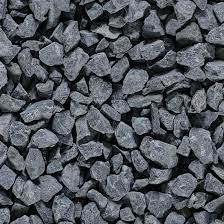
This article first talks about railways in general and ballast in particular. An inventory is then Basaltic Aggregates made on the modernization of the Senegalese ballast railways. In the second phase, an experimental work of characterization of basaltic aggregates of Diack (Locality of Ngoundiane, Thiès region, Senegal) is presented. The grain size studied is 25/50 mm as for any material studied for use as railway ballast. Experimental work presented consists of the characterization of the shape of an aggregate using the NF P 18-301 standard. The test consists of comparing the volume of the aggregate to that of an equivalent sphere with the largest diameter of the aggregate, by calculating the average volume coefficient. With a Representative Elementary Volume (REV) of 6 aggregates, the volume coefficient “Cv” fluctuates between 0.27 and 0.49 with an average volume coefficient of 0.39 which is well above 0.15. The grains studied are polyhedral and therefore have a high mechanical resistance.
Senegal is a West African country bordering the Atlantic Ocean to the west, Mauritania to the north, Mali to the east, Guinea and Guinea-Bissau to the south. The railway sector is both an activity sector and a support sector for other economic or socio-economic sectors. Rail transport is a sector that has reached a level of maturity in developed countries. He knows a remarkable return after a period of decline. The renewed interest in this mode of transport can be explained by its ability to transport huge volumes of goods or a large number of passengers with energy efficiency and in a very environmentally friendly way. In Senegal, rail traffic ranks second after road transport in terms of satisfaction with domestic travel and relations with Mali. However, the current public transport system in the Dakar region is made up of buses, Rapid Coaches, taxis and the “Petit Train de Banlieue” (PTB). This system does not satisfactorily meet the travel needs of estimated 124,000 passengers during the morning rush hour in Dakar. It is therefore essential to replace the PTB with the Regional Express Train (TER) to ensure, through an omnibus and possibly semi-direct service, the service to the greater Dakar suburbs. This project is articulated with the project of Bus Rapid Transit (BRT) lines and other existing and/or planned public transport modes. The TER project consists of the creation of a double-track “passenger” line:
– in phase 1, 38 km in the existing railway right-of-way between Dakar and Diamniadio;
– in phase 2, on 19 km of line between Diamniadio and Blaise Diagne International Airport (AIBD).
This line is:
– standard gauge UIC (1435 mm) in UIC 54 rails on monoblock or bi-block sleepers;
– electrified in 2 × 25 kV;
– equipped with ERTMS (European Rail Traffic Management System) rail signalling system level 2.
The project also includes the redevelopment of the existing metric track by shifting it and which will require normative compliance. The cross section is designed in this phase 1, with 3 lanes, and will eventually evolve to 4 lanes in phase 2. The said profile consists of:
– dimensioning the engineering structures carrying the 4 lanes;
– reserving the land for 4 lanes;
– securing the platform by: 1) a fully fenced right-of-way; 2) removing crossings (except 2 industrial); 3) restoration of continuities by road works and uneven pedestrians. Figure 1 shows the cross-sectional profile selected [1].
In Senegal, the building and public works sector and roads are booming. The construction of buildings, bridges and road infrastructure requires large quantities of quality materials. Aggregate is intended to be used in the composition of materials for the manufacture of public works and building structures. Among these materials, we find aggregates, which are used in very large quantities. It is therefore imperative that it be able to meet certain minimum quality requirements. Their production in Senegal is quite large and varied. Aggregate deposits are found just about everywhere in the territory. The main aggregates used for construction are: basalt, limestone and sandstone. The characteristics of
the materials that make up the foundations of pavements must meet certain minimum quality requirements.
The study of the mechanical behaviour of materials used in public works in general has been of interest to the scientific community for a very long time ( [2] – [19], among others). The case of materials used as railway ballast is also a branch of public works that attracts a lot of interest. Ballast is the top layer of a ballasted track structure on which the ties supporting the rail rest. It is a hard, elastic, calibrated, hollow and compact rock crushed mat blocking the sleepers, which can be levelled to the millimetre by interlocking 25 to 50 mm sized aggregates. The ballast grain size can vary according to use. It can be 25/40 mm when the ballast is intended for ordinary turnout tracks; as it can be up to 40/63 mm in the case of tracks subject to high stress from loaded high-speed trains. As an example, the class of new ballast currently used in high-speed lines (LGV) in France is 31.5/50 mm [20]. Figure 2 shows a cross-section of a railway track with the location of the ballast layer. Conventional ballasted railway track is made up of a set of elements that enable trains to be guided and the loads induced by them to be supported. A distinction is made between the superstructure comprising the rails, fasteners, footings, sleepers, ballast, any sub-ballast layer, and the substructure consisting of the support platform. Ballast often comes from the crushing of rocks extracted from hard stone quarries (granite, diorite, rhyolite, basalt, quartzite, sandstone, gneiss, etc.) and is a track support element and part of the superstructure. The ballast elements must interlock to form a compact but permeable mass. The quarries where these materials are extracted and processed are called ballast pits. The thickness of the ballast layer under the sleepers, between 150 mm and 400 mm, depends on the type of sleeper, the speed of the trains and the UIC group of the railway line. The ballast thickness on high-speed lines (LGV) is generally 30 cm under the sleepers [8]. The image in Figure 3 shows the ballast layer for an LGV line.
In recent decades, ballast has been increasingly studied in order to better understand its behaviour and degradation modes. These studies make it possible to
prescribe increasing quality and performance criteria, and to be able to anticipate maintenance before the degree of degradation reaches a critical threshold likely to cause insecurity and discomfort to users.
Good ballast reduces the rate of deformation, maintains track geometry by limiting the movement of ballast particles, and the horizontal and vertical alignment of the rails can be maintained for a very long time. An important characteristic of good ballast is the grain shape of the material. Studies on the effect of aggregate shape have been carried out by authors on aggregates in general ( [22] [23] [24] [25], among others). But for the case of ballast, studies on this subject are only numerous in the literature. One can quote the works of [26] which provided an accurate description of grain morphology for the numerical study of the mechanical behaviour of railway ballast.
Therefore, we considered that it is necessary to characterize the shape of an aggregate by a numerical value by applying it to a material intended for Senegalese railway ballast. This study focuses on basalt from Diack (Locality of Ngoundiane, Thiès Region, Senegal). This interest concerns class 25/50 mm for its use in Senegalese railways. Experimental work is also presented and consists of the characterization of the shape of an aggregate. The idea is to characterize experimentally Diack basaltic aggregates by a numerical value representing their absolute volume.